WP2 progress: getting ready for the multi-CSP dual-link flight campaign
Since its kick-off in January 2026, Work Package 2 has had its demonstration plan approved, developed a ground router that opens Iris satellite datalink to a second network provider, and prepared a flight campaign that starts in early 2027.
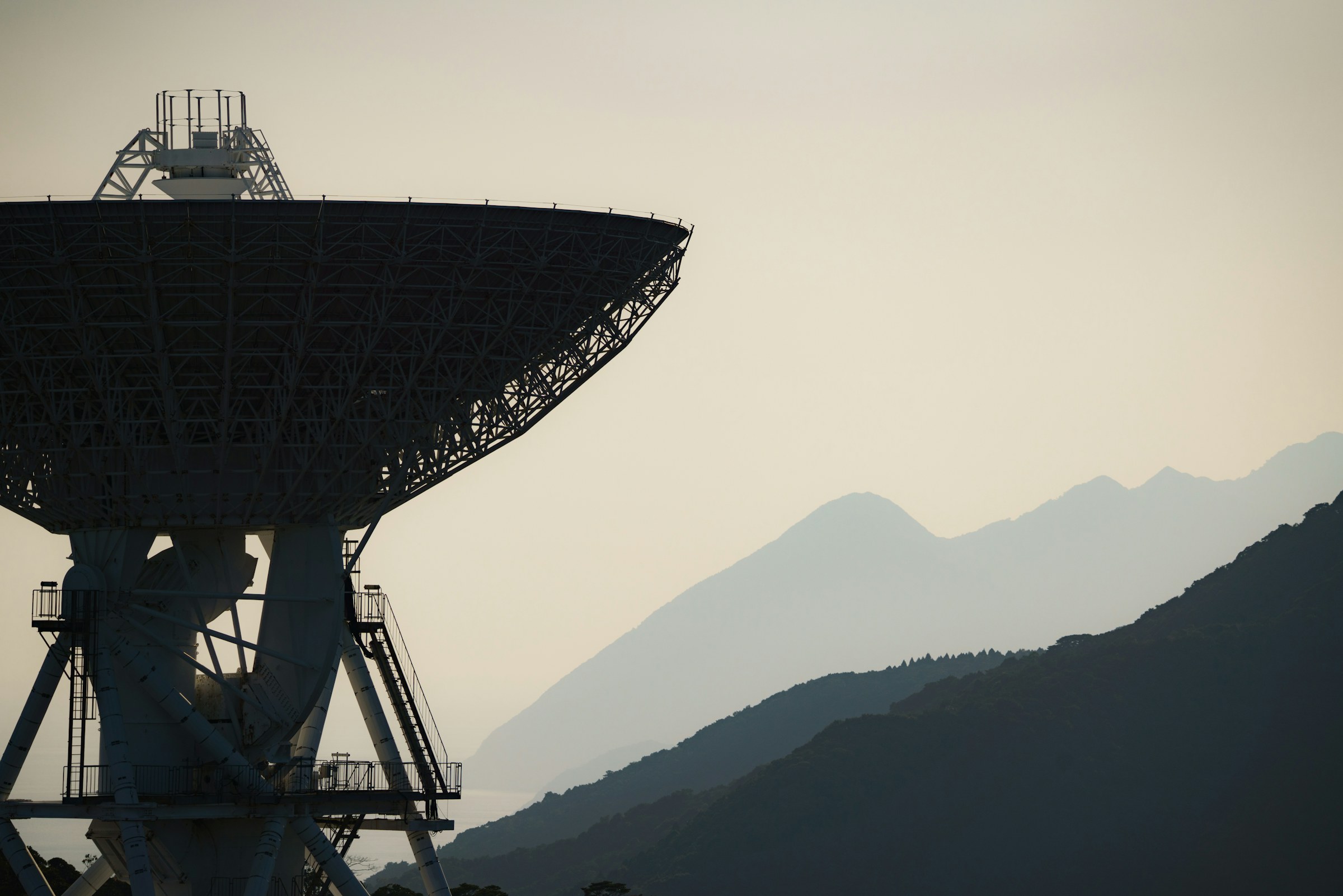
Photo: Carol Gauthier / Unsplash
Work Package 2, led by ESSP, prepares AMEA's first large-scale demonstration: the multi-CSP dual link (SESAR Solution 0568). Commercial aircraft will exchange air traffic control messages over two links, Iris satellite communications and VDL Mode 2 radio, through more than one communication service provider, and switch between them automatically. Here is where the work stands in October 2026.
Why it matters
In European airspace, many routine exchanges between controllers and pilots already go by datalink: short text messages (CPDLC) replace voice for clearances and frequency changes. These messages travel mainly over VDL Mode 2, a ground-based radio network designed in the 1990s. Traffic keeps growing and trajectory-based operations will add more data, so VDL Mode 2 capacity is expected to become insufficient between 2030 and 2035.
A satellite link takes part of that load. Iris, developed by the European Space Agency with Viasat, provides satellite datalink for air traffic services, and ESSP has operated the Iris service since January 2024, certified by EASA. The previous SESAR project, ESMA, showed that aircraft can use Iris and VDL Mode 2 together through a single network provider. AMEA takes the next step: several providers, more aircraft, more air navigation service providers and a longer campaign.
How the dual link works
Each equipped aircraft can send the same messages over Iris or over VDL Mode 2. During the demonstration, aircraft are set to "SATCOM preferred": they use the satellite link whenever it is available, which relieves VDL Mode 2, and switch back automatically when needed. Pilots and controllers do not select anything, and voice remains available at all times.
Until now, Iris traffic has reached the ground ATN network through one provider, SITA. To open Iris to more than one communication service provider, Collins Aerospace has developed a new Iris Ground-Ground Router. Airlines and air navigation service providers connected to either network will then be able to use Iris.
What has been done since January 2026
27 January 2026: WP2 kicked off with the partners.
30 April 2026: the initial Demonstration Plan (D2.2) was submitted. CINEA and the SESAR 3 Joint Undertaking approved it in June.
April to June 2026: Collins Aerospace completed the development of the Iris Ground-Ground Router, then the first phase of interoperability testing.
In progress: the Demonstration Requirements Specification (D2.1), which sets what the dual link must achieve, and the final Demonstration Plan (D2.6), which details the flight exercises. Both are due at the end of November 2026.
September 2026: 47 aircraft were already equipped for Iris SATCOM. The campaign targets more than 200.
What the flights will show
The demonstration plan sets 12 objectives across two exercises, run on commercial flights with Airbus A320-family and A350 aircraft:
Exercise 1: CPDLC (ATN B1 service) on flights across European airspace, with several air navigation service providers.
Exercise 2: CPDLC and ADS-C (ATS B2 service) over the Maastricht Upper Area Control Centre (MUAC), operated by EUROCONTROL, the only European centre that provides ATS B2 today.
Success is measured against clear criteria:
the link switches automatically, with no action from pilots or controllers;
CPDLC sessions and ADS-C contracts continue when the aircraft changes link or provider;
no additional session drops;
no degradation of VDL Mode 2 performance;
no impact on airlines' own operational messages;
no extra workload for pilots or controllers.
The partners review the results every month, from data collected by all the actors.
Who does what
ESSP leads WP2, provides the Iris service and produces the monthly performance reports.
Collins Aerospace specifies the demonstration requirements and develops the Iris Ground-Ground Router.
SITA provides its ATN/OSI network and monitoring tools.
Airbus supports the equipment of A350 aircraft and provides analysis tools.
Air France and KLM contribute to the aircraft deployment plan.
DFS, DSNA, ENAIRE and NATS, air navigation service providers, follow the datalink operations in their airspace. NATS also tests the new router as an end user.
EUROCONTROL analyses end-to-end performance and provides the ATS B2 services at MUAC.
See all AMEA partners.
What comes next
End of November 2026: requirements (D2.1) and final Demonstration Plan (D2.6).
1 January 2027: ESMA hands over its flight activities to AMEA.
Early 2027: EASA approval of the new multi-CSP ground infrastructure, expected before the first flights.
Early 2027 to September 2029: commercial flight campaign, with monthly performance reports.
2029: final demonstration report (D2.3).
WP2 works on today's ATN/OSI network. In parallel, Work Package 3 prepares its successor, ATN/IPS, which will open satellite datalink to more aircraft, including Boeing aircraft: read the WP3 kick-off. For the start of WP2, see the WP2 kick-off.
Key terms
ADS-C (Automatic Dependent Surveillance – Contract): the aircraft automatically reports its position and planned trajectory to air traffic control.
ATN B1 / ATS B2: ATN Baseline 1 is the CPDLC service in use in European airspace today. ATS Baseline 2 adds trajectory data through ADS-C, a building block of trajectory-based operations.
CPDLC (Controller–Pilot Data Link Communications): text messages between controllers and pilots, used instead of voice for routine exchanges.
CSP (communication service provider): a company, such as SITA or Collins Aerospace, that operates the network carrying datalink messages between aircraft and the ground.
Iris: satellite datalink for air traffic management, developed by the European Space Agency with Viasat and operated by ESSP.
VDL Mode 2 (VHF Digital Link Mode 2): the ground-based radio datalink used in Europe today.
AMEA is co-funded by the European Union under the Connecting Europe Facility (CEF Transport, grant agreement No 101233037), managed by CINEA, and supported by the SESAR 3 Joint Undertaking.